


By using our website, you agree to the use of cookies as described in our Cookie Policy
Tarpon in Tampa Bay are picky. The bait you use makes or breaks your shot at a hookup. Some days, one bait gets all the action. Other days, nothing works. These fish don’t waste energy on anything that feels off. Bait choice isn’t a side note. It’s the main thing that decides if you get a bite or go home empty.
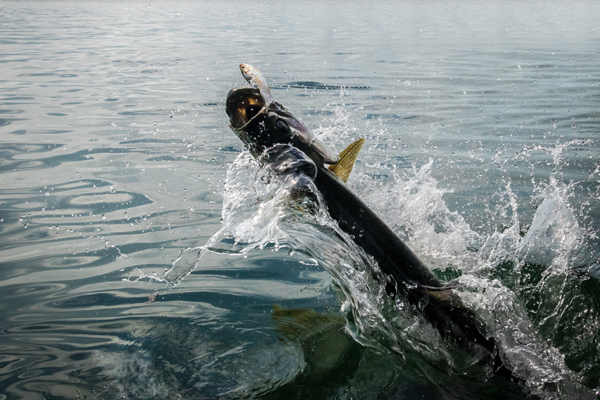
- Threadfin herring: Tarpon crush these when schools fill the bay. They’re easy to spot, easy to net, and hard for tarpon to resist.
- Pinfish: Tough, lively, and always moving. They stay on the hook and draw attention, even when the bite slows.
- Crabs: When tarpon roll on the surface, a drifting crab gets inhaled. No hesitation. No second look.
- Scaled sardines: Perfect for chumming or free-lining. They’re everywhere in the spring and summer, and tarpon never get tired of them.
- Cut bait: A chunk of mullet or ladyfish turns a dead tide into a shot at a bite. Sometimes, the smell alone brings tarpon in close.
Every season, the menu changes. Early summer, threadfins and crabs dominate. By late summer, pinfish and cut bait start getting more attention. Some days, tarpon want a frantic baitfish darting through the current. Other days, a slow, natural drift wins. For more on matching bait to the bite, this guide breaks down what works for every species in the bay.
When Lures Take Over
Live bait gets the spotlight, but lures have their own moments. Early mornings, glassy water, and tarpon feeding near the surface. This is when lures shine. Artificial baits cover water fast. They let you fish when live bait is scarce or when you want to keep moving. Some of the biggest tarpon in Tampa Bay have fallen for a well-worked lure.
- Soft plastics: Paddle tails and jerkbaits look like wounded baitfish. Tarpon react fast. One good cast and you’re hooked up.
- Swimbaits: Big profiles tempt big fish. Deep channels, moving water, and a steady retrieve put you in the game.
- Topwater plugs: Explosive strikes at dawn or dusk. When tarpon feed on the surface, nothing beats the rush of a topwater hit.
- Spoons: Flashy, easy to cast, and perfect for murky water. They grab attention and trigger bites when visibility drops.
- Jigs: Versatile and deadly near the bottom. When tarpon hold deep, a jig gets down fast and stays in the strike zone.
Lures let you fish longer and cover more ground. They’re also easier on the fish. Single hooks, quick releases, less stress. For seasonal timing and more on lure tactics, this article lays out the best windows for every target. Want hands-on tips? Our inshore light tackle charters put you right in the action with proven lure techniques. We’ve seen firsthand how the right artificial can turn a slow morning into a day to remember.
Clear Water Dem Demands Stealth
Clear water in Tampa Bay changes everything. Tarpon see every detail. Lines, knots, shadows. They spook at the smallest mistake. Downsizing leaders, switching to fluorocarbon, and keeping presentations natural make the difference. No room for sloppy rigs or heavy hardware. In these conditions, subtlety wins. For a closer look at how local guides adapt, tactics locals use for inshore light tackle fishing breaks down the adjustments that matter.
Getting in the Strike Zone
Tarpon don’t chase far. They want the bait or lure right in front of them. Reading the water, spotting rolling fish, and casting ahead of the school puts you in the game. Let the bait drift naturally. Don’t force it. Spook the school and the shot is gone. Every cast counts. For more on reading fish and making the most of every opportunity, what guides teach on tarpon trips covers the details that separate luck from skill. If you’re looking to improve your odds, our team at Fishing Guide Tampa Bay can show you how to read the water and position every cast for success.
Fighting Tarpon Without Losing Them
Hook a tarpon and the real test begins. These fish jump, run, and shake off weak knots. Keep the rod tip high. Bow to the fish when it leaps. Steady pressure wears them down. Rushing the fight breaks lines and loses fish. Patience lands more tarpon than brute force. Want to see what a full day of action looks like? Our full day fishing charter experience shows what it takes to go the distance. We guide anglers through every step, from the first hookup to the final release.
Gear That Matches the Method
Live bait and lures demand different setups. For live bait, heavy spinning rods, strong reels, and 60-80 lb fluorocarbon leaders handle the power of big tarpon. Circle hooks keep fish healthy and boost hookup rates. With lures, a lighter rod and reel combo lets you cast farther and work baits with more action. Braided line gives you feel. A long leader keeps wary fish from spotting your rig. For a full gear breakdown, this guide covers what works best for Tampa Bay inshore fishing.
- Live bait setup: Heavy rod, strong reel, thick leader, circle hook.
- Lure setup: Medium rod, fast reel, braided line, long fluorocarbon leader, single hook.
Switching between setups keeps you ready for whatever the day brings. Some days, tarpon want live bait. Other days, lures get more attention. The right gear lets you adapt without missing a beat. If you’re unsure what to bring, our charters provide all the equipment you’ll need for a successful day on the water.
Book Your Tarpon Fishing Charter in Tampa Bay Now
Ready to chase silver kings with a crew that knows every trick in the book? Call Fishing Guide Tampa Bay at 813-540-4202 or contact us to lock in your spot. We’ll help you pick the best bait, dial in your gear, and put you on the fish. No guessing, just results.
‹ Back
Recent Posts
-
How Early Should You Arrive for a Tampa Bay Fishing Charter?
September 15, 2026
-
Can You Catch Snook Year-Round in Tampa Bay?
September 1, 2026
-
What Is the Average Cost of a Tampa Fishing Charter?
August 18, 2026
-
What Fish Are Biting in Tampa Bay?
August 4, 2026
-
What Is the 90/10 Rule in Fishing?
July 21, 2026